The trial of Adolf Eichmann was intended to preserve or increase the reparations regime between Germany and Israel.
Posted by The Pete Quiñones Show, Checked
- Sources
- 11 context
- Said
- 1 time·
- Confidence
- 30%
 The Pete Quiñones ShowOct 10, 2026
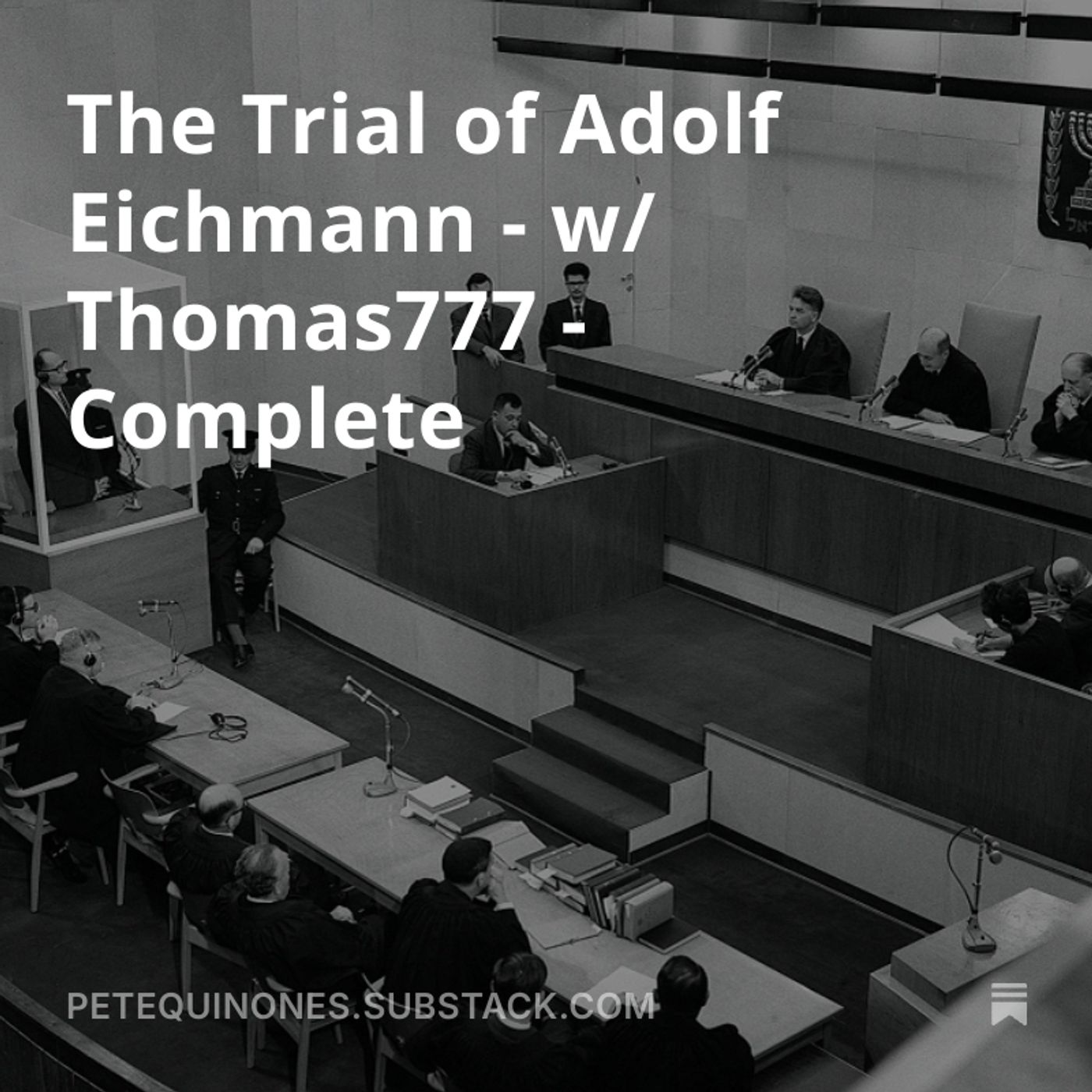
None of the provided sources says the Eichmann trial was intended to preserve or expand the German reparations regime. They describe the trial's stated aims as didactic, nation-building and political (educating the public, justifying Israel, reminding nations of their obligation to support a Jewish state), and Source 9 notes reparations money went to state coffers rather than survivors.
What was said
… I mean, that's the same, that's the same mode of reasoning or lack thereof. But, um, you know, and I, to be clear, also, uh, what I mentioned at, um, the outset, and this, this is a major aspect of it, of the ICMAP fair, you know, it was not just the need for a second Nuremberg, but to beef up the reparations regime or preserve the reparations regime because this was a political problem of, of a critical nature. You know, and these, what was called euphemistically, the indemnity for which Germany was responsible to Israel in the form of, you know, billions and billions of dollars in damages, this was what was keeping Israel alive, like, literally. It's not polemic. …
The Pete Quiñones Show · · from the transcriptPost →What we found
Context. Multiple scholarly sources describe the trial's purposes as didactic and political: educating Israelis and the world, and showing that Jews could be safe only in Israel.[3][4][5][6]
Context. Segev, as quoted in a 2025 law review article, says one aim was to remind the countries of the world that the Holocaust obligated them to support the Jewish state. This is close to the reparations theme but does not name reparations or the reparations regime as a goal.[4]
Context. Yablonka notes that reparations from Germany were earmarked for Holocaust survivors but went to state coffers, and that survivors demanded compensation before the trial. This discusses reparations politics around the trial, not the trial's intended purpose.[7]
Context. Sources on the Eichmann trial's purposes do not mention preserving or increasing the German reparations regime as an aim of the trial.[1][2][3][4][5][6][7][8][9][10][11]
Sources
11 sources: 2 fact-checkers, 2 primary, 7 not rated
- 1Israel's Mossad spy agency shrouded in mystery and mystiqueapnews.com · fact-checker · cited for: context
- 2Israel letter shows Eichmann sought clemency as 'mere instrument' of Nazisreuters.com · fact-checker · cited for: context
- 3HOUSTON JOURNAL OF INTERNATIONAL LAWlaw.uh.edu · primary source · cited for: context
- 4Victim Participation and Public Messaging: Contemporary Lessons of the Eichmann Trialscholarship.law.umn.edu · primary source · cited for: context
- 5Mapping Politics 8 (2017)journals.library.mun.ca · not rated · cited for: context
- 6Unknown Eichmann Trial: The Story of the Judgeacademic.oup.com · not rated · cited for: context
- 7Fifty Years Since the Eichmann Trial, by Prof. Chana Yablonkayadvashem.org · not rated · cited for: context
- 8Eichmann trial - Wikipediaen.wikipedia.org · not rated · cited for: context
- 9Eichmann in Jerusalem-Vnewyorker.com · not rated · cited for: context
- 10Trials (Chapter 6) - Israelpolitikcambridge.org · not rated · cited for: context
- 11www.jstor.org › stable › 10The Eichmann Trial Reconsidered - JSTORjstor.org · not rated · cited for: context
Where this claim was made
Said in 1 published post
Related claims
- The Eichmann trial established special dispensations and exclusive privileges of a Jewish state within the international legal system.False
- The trial of Adolf Eichmann established a precedent for holding individuals in court for acts declared criminal in the service of the Axis powers.True
- Reparations payments from Germany bankrolled about a third of Israel's electrical system and infrastructure from 1953 until the Eichmann trial.Can’t tell
- Israel did not allow witnesses considered tainted to participate in the trial of Adolf Eichmann.True
- The Israeli government paid for Adolf Eichmann's lawyer and flew him to Israel for the trial.True